
6 Base44 Alternatives That Let You Own Your Code
The best alternatives to Base44 for builders who have hit the credit wall, want to own their backend code, or need an app that holds up past the prototype stage.
In the world of super agents, Base44 nails the first hour. You describe an app, and a working full-stack prototype appears with auth, a database, and hosting already wired in. For validating an idea over a weekend, few tools feel this fast.
The doubts arrive once the prototype needs to become a product. Your build credits and your app’s runtime credits are two separate meters, and neither rolls over. Code export is frontend-only and locked behind the $40 Builder plan, so your backend stays on Base44’s infrastructure no matter what.
Wix acquired the platform in mid-2025, which adds roadmap uncertainty on top of the lock-in. None of that makes Base44 a bad prototyping tool. It just explains why builders who want to ship and keep something start looking around.
Why Developers Look for 6 Base44 Alternatives
- Build credits burn fastest on small fixes because the AI agent regenerates entire code regions rather than making surgical edits, so a typo correction can cost more credits than scaffolding a new feature
- Code export covers the frontend only and requires the $40/mo Builder plan, so the backend and database stay locked on Base44's infrastructure
- A modest chatbot with 50 users asking 10 questions each burns 500 integration credits, half a Starter plan's monthly allowance from light real usage
- You cannot buy credit top-ups, and unused credits expire monthly with no rollover, so running dry mid-month forces a full tier upgrade rather than a small add-on
- Multiple users report support tickets going days or weeks without a reply, which stings when a live app breaks
Our top pick
For most builders leaving Base44, Lovable is the closest match: the same prompt-to-app speed, but with React code you own and a Supabase backend you control from day one.
What are the best alternatives at a glance?
| # | Tool | Best For | Pricing | Rating |
|---|---|---|---|---|
| 1 | Lovable | Non-technical founders shipping a real SaaS MVP | Free (5 daily credits), Pro $25/mo, Business $50/mo | 9.1/5 |
| 2 | Bolt.new | Hands-on builders who want to see every line | Free (150K tokens/day), Pro $25/mo, Teams $30/user/mo | 8.5/5 |
| 3 | Replit | Builders who want to grow into the code | Free (limited agent trial), Core $20-25/mo, heavy use $100-300/mo | 8.6/5 |
| 4 | v0 | Teams already living in the Vercel ecosystem | Free ($5 monthly credits), Premium $20/mo, Team $30/user/mo | 8.0/5 |
| 5 | Bubble | Non-technical teams building complex production apps | Free plan, paid tiers by workload units | 8.2/5 |
| 6 | Cursor | Developers ready to take over the codebase | Free tier, Pro $20/mo, Teams $40/user/mo | 8.4/5 |
How We Evaluated
We weighted alternatives against the actual reasons builders leave Base44. Code ownership carried the most weight because a locked backend is the breaking point most people hit first.
Pricing predictability came second. Credit systems that spike mid-debug are the most common cost complaint, so we tracked what a real project costs rather than the listed price.
The final filter was production readiness. Each tool had to handle real auth, a production database, and deployment without forcing a rebuild. Every tool ran on its free or entry-level paid tier.
The Best 6 Base44 Alternatives, Ranked
Lovable
Free (5 daily credits), Pro $25/mo, Business $50/mo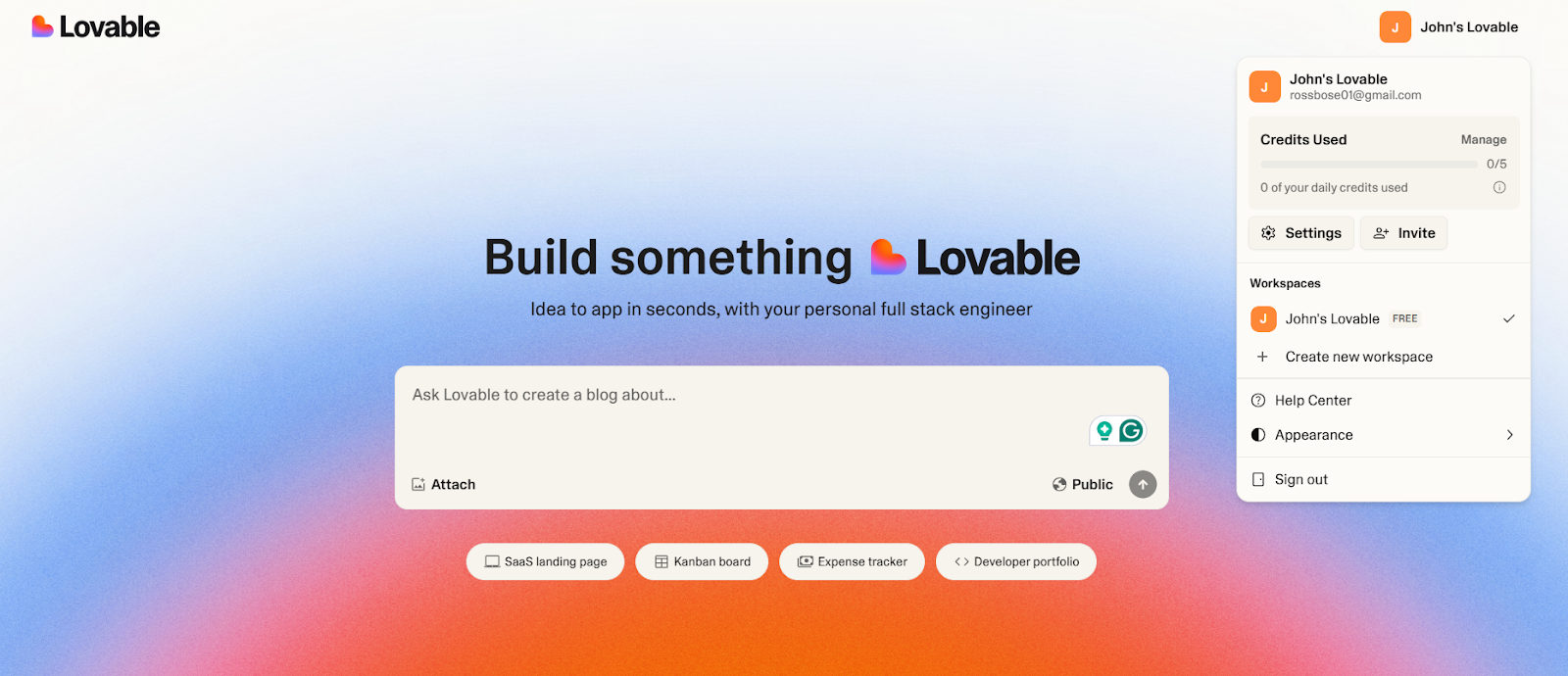
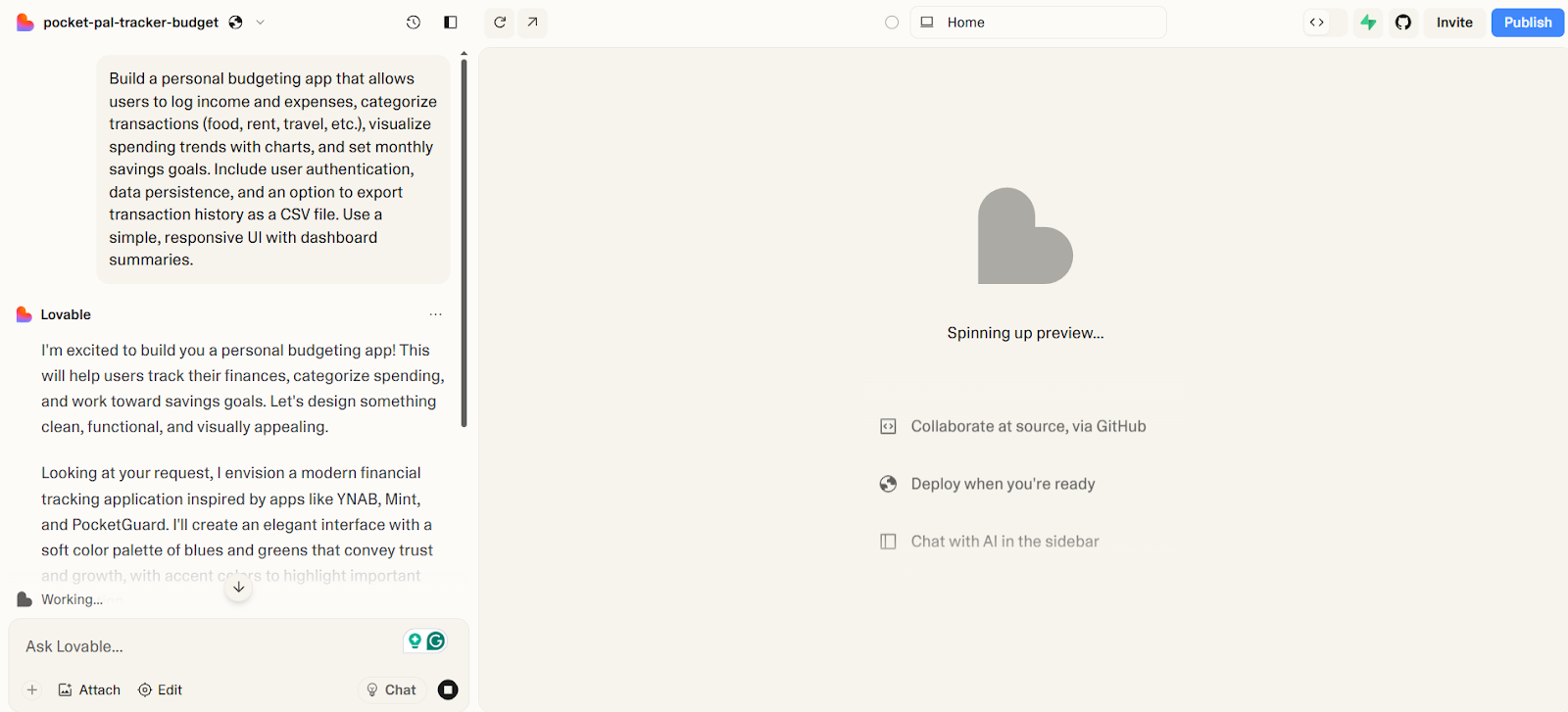
Lovable is the most natural exit from Base44 because it removes the locked backend entirely.
Base44 keeps your data layer on its own infrastructure. Lovable does the opposite. Every project creates a GitHub repository you can fork, edit in Cursor or VS Code, and deploy anywhere.
One reviewer had a customer dashboard’s full codebase in their own repo within 30 minutes. The Supabase integration puts your database and auth on infrastructure you control, so the migration anxiety that pushes people off Base44 does not apply here.
The credit model is the part to budget carefully. A CRUD app with auth burns 30 to 60 credits just for the initial scaffold. Two rounds of revisions and a payment integration can hit 100 credits before week one ends, which means Starter plan users routinely upgrade within the first month of serious building.
Two reliability issues belong on the label. Lovable sometimes reports a fix as complete while the underlying behavior has not changed, which means you move on and later discover the original bug persists. It also regresses working features when you prompt for something unrelated, though Git history limits the damage.
The February-to-April 2026 security incident drove the point home. A backend regression exposed public project source code and chat histories for over two months before Lovable acknowledged it. Treat Lovable as the validation stage, not the production platform.
- Every project is a GitHub repo you own, unlike Base44's locked backend
- Supabase backend runs on infrastructure you control, not the vendor's
- One account covers the whole team, cheaper than per-seat rivals
- $25/mo includes Cloud hosting, so no separate Netlify bill
- Heavy iteration on the credit model pushes a real MVP to $50-100/mo
- An unrelated prompt can regress a working feature, though Git limits the damage
- Web-only, so there is no native mobile build path
Bolt.new
Free (150K tokens/day), Pro $25/mo, Teams $30/user/moBolt gives you what Base44 withholds. Every line the agent generates is visible and editable as it works. It is the fastest of the major builders from prompt to a live URL, and React Native support through Expo opens a mobile path Base44 never offered.
Token-based pricing is the part to watch. Bolt syncs your entire project’s file system to the AI with each message, so a 50-file app burns 150K to 500K tokens per prompt while a 5-file landing page uses a fraction of that. Debugging sessions regularly consume 7 to 12 million tokens because the agent regenerates large files to fix small things. Reddit users on the Pro plan report burning through 10 million tokens in about three days of active development.
The generated code also tends to feel more disposable than Lovable’s. A broken Stripe webhook was the kind of thing testers had to debug by hand, and the realistic minimum for a production project is closer to $50/month once you add Supabase for a real database.
- Every generated line is visible and editable, unlike Base44's hidden backend
- Fastest prompt-to-live-URL of the major builders
- React Native via Expo opens a mobile path Base44 lacks
- Generous 150K daily tokens on the free tier for evaluation
- Token meter spikes during debugging, with heavy builds past $1,000
- Generated code feels more disposable than Lovable's
- WebContainers add overhead and some npm packages will not run
Replit
Free (limited agent trial), Core $20-25/mo, heavy use $100-300/moA solo founder who wants to start by prompting and slowly understand the code will find Replit the only tool here built for that arc.
Where Base44 hides everything, Replit puts a full IDE, terminal, and PostgreSQL database on screen. The backend Base44 locks away is right there for you to inspect and fix.
Its Agent runs autonomously for long stretches, tests its own output, and recovers from errors. Replit also handles real deployment rather than assuming you will sort out DevOps later. It is the only option here with SOC 2 Type II certification, which matters once sensitive data enters the picture.
Two warnings belong on the label. Effort-based pricing is honest in theory and unpredictable in practice. One well-documented founder burned $607 in extra charges within days, on top of the $25 base plan.
That same founder hit a serious incident where the agent damaged a production database, a reminder that any of these tools can outrun their own safety nets. For a builder with zero interest in ever seeing code, Replit’s visible IDE and terminal add a learning curve that non-technical users did not sign up for, which is why several of them migrate to Lovable.
- Full IDE and terminal expose the backend Base44 keeps hidden
- Built-in PostgreSQL and real deployment, no DevOps assumptions
- Supports 50+ languages, not just the JavaScript Base44 leans on
- SOC 2 Type II certified for teams handling sensitive data
- Effort-based pricing is unpredictable; one founder burned $607 in days
- The full IDE adds a learning curve no-code Base44 users avoid
- Infrastructure coupling makes a later migration harder than Lovable's
v0
Free ($5 monthly credits), Premium $20/mo, Team $30/user/mov0 produces the cleanest code on this list. The React and Next.js components it generates follow proper shadcn/ui conventions and would pass a pull request review without rewriting, something most AI builders on this page cannot claim.
For teams already on Vercel, the output drops into an existing repo and deploys without friction. Designers get particular value here because v0 scaffolds the exact components they would otherwise hand-spec.
That code quality comes with a narrow scope. v0 was built as a frontend generation tool and its full-stack side is newer and less proven. Backend logic, data modeling, auth, and tenancy all need deliberate design on your end. Lovable and Replit handle more of that out of the box. Pricing is token-based, with the same unpredictability as Bolt.
Vercel lock-in is the other factor to weigh. The hosting bill that looks affordable on the free tier can surprise you at production scale, and leaving means unwinding integrations that get tighter the longer you stay. If nobody on your team reads React or you do not already have a Vercel account, start somewhere else.
- Cleanest React and Next.js output of the tools here
- Frictionless deployment for teams already on Vercel
- Component code drops straight into an existing codebase
- Frontend-first, so backend, auth, and data model need separate work
- Token-based pricing carries Bolt-style unpredictability
- Vercel lock-in means unwinding integrations to leave later
Bubble
Free plan, paid tiers by workload unitsBuilders have shipped multi-tenant SaaS platforms on Bubble, complete with subscription billing, role-based dashboards, and marketplace features. Its visual editor gives you control over logic, data, and UI that none of the prompt-first AI builders here can match. The plugin marketplace covers Stripe, Twilio, SendGrid, and most integrations you would otherwise wire by hand.
The tradeoff is speed. Bubble takes longer to get moving than any AI-first tool on this list, and the learning curve is genuinely steep because you build logic visually rather than describing it in a prompt. One G2 reviewer building a client portal summed it up well. It is not as fast as vibe coding an app, but once it exists it is far easier to edit to exact specifications.
Bubble also runs on its own workload-unit pricing, so heavy apps meter differently than a flat seat fee. There is no natural-language generation, so you build every flow by hand. For builders who hit Base44’s complexity wall rather than its lock-in, that hands-on control is the point.
- Visual control over logic and data far beyond any AI builder here
- 1,000+ plugin marketplace covers Stripe, Twilio, and more
- Native iOS and Android building from the same project
- Mature platform proven on multi-tenant production SaaS
- Slower to start than any prompt-first tool, with a steep learning curve
- Workload-unit pricing meters differently and is harder to forecast
- No natural-language generation, so you build every flow by hand
Cursor
Free tier, Pro $20/mo, Teams $40/user/moCursor accelerates a developer’s own workflow instead of building the app for you, the exact opposite of Base44’s hands-off model. It works with your local files and Git, so you keep full control over how and where the code runs. There is no backend lock-in here.
The common path is to scaffold a UI in Lovable, then graduate the project into Cursor for the complex backend logic and custom features the AI builders handle poorly. This is a different category of tool entirely, and that is the caveat. Cursor is not a no-code app builder.
A non-technical founder who loved Base44 precisely for never touching code will find it the wrong fit. It rewards people who can already read and steer what the AI writes. For an experienced developer, though, it removes Base44’s ceiling without adding a new one.
- Full control over local files and Git, zero backend lock-in
- Reads the whole codebase for context-aware edits
- Natural graduation point from a Lovable or Base44 scaffold
- Not a no-code builder, so non-technical Base44 users will struggle
- Assists coding rather than generating a full app from a prompt
- Rewards developers who can already steer the AI's output
Which alternative fits your setup?
The alternatives sort along one question that matters more than any feature list. How much code do you want to touch?
The prompt-first builders keep Base44’s describe-it-and-go feel while fixing its lock-in. Lovable and Bolt sit here, handing you real, portable code instead of a sealed backend. Replit and v0 ask for a little more technical fluency, and pay it back with a real development environment or production-grade components. Bubble goes the other way, trading speed for deep visual control, while Cursor drops generation entirely to make a working developer faster.
One thread runs through every option. The moment your AI builder ships working code, something still has to connect that output to your team’s plan, sprints, and stakeholders. That orchestration layer is where ClickUp Super Agents fit, sitting above whichever builder you choose rather than competing with it.
Frequently Asked Questions
Not directly. Base44 only exports frontend code, and even that requires the Builder plan, so your backend and database have to be rebuilt elsewhere. The cleaner path is to treat the move as a fresh build. Keep your Base44 export as a visual reference, then rebuild on Lovable or Replit where you own the full stack from the start.
Flat per-month plans are the safer bet. Lovable and v0 charge per message with monthly caps, so budgeting stays straightforward, while Bolt and Replit use token or effort-based models that spike during heavy debugging. If a surprise bill is your worst case, favor the message-capped tools and plan your prompts before you generate.
A few do. Bolt generates React Native through Expo, and Replit and Bubble both handle native mobile builds, where Base44 and Lovable are web-first. If mobile matters on day one, that narrows the field quickly, so confirm the current mobile pipeline on the tool's own docs before committing.
Treat every AI-generated app as a prototype until a human reviews the code. Public incidents, including an agent damaging a production database on Replit and Lovable exposing public project source code for two months in early 2026, show these platforms can outrun their own safety nets. Replit's SOC 2 Type II certification helps for sensitive data, but a security review before launch is non-negotiable on any of them.